
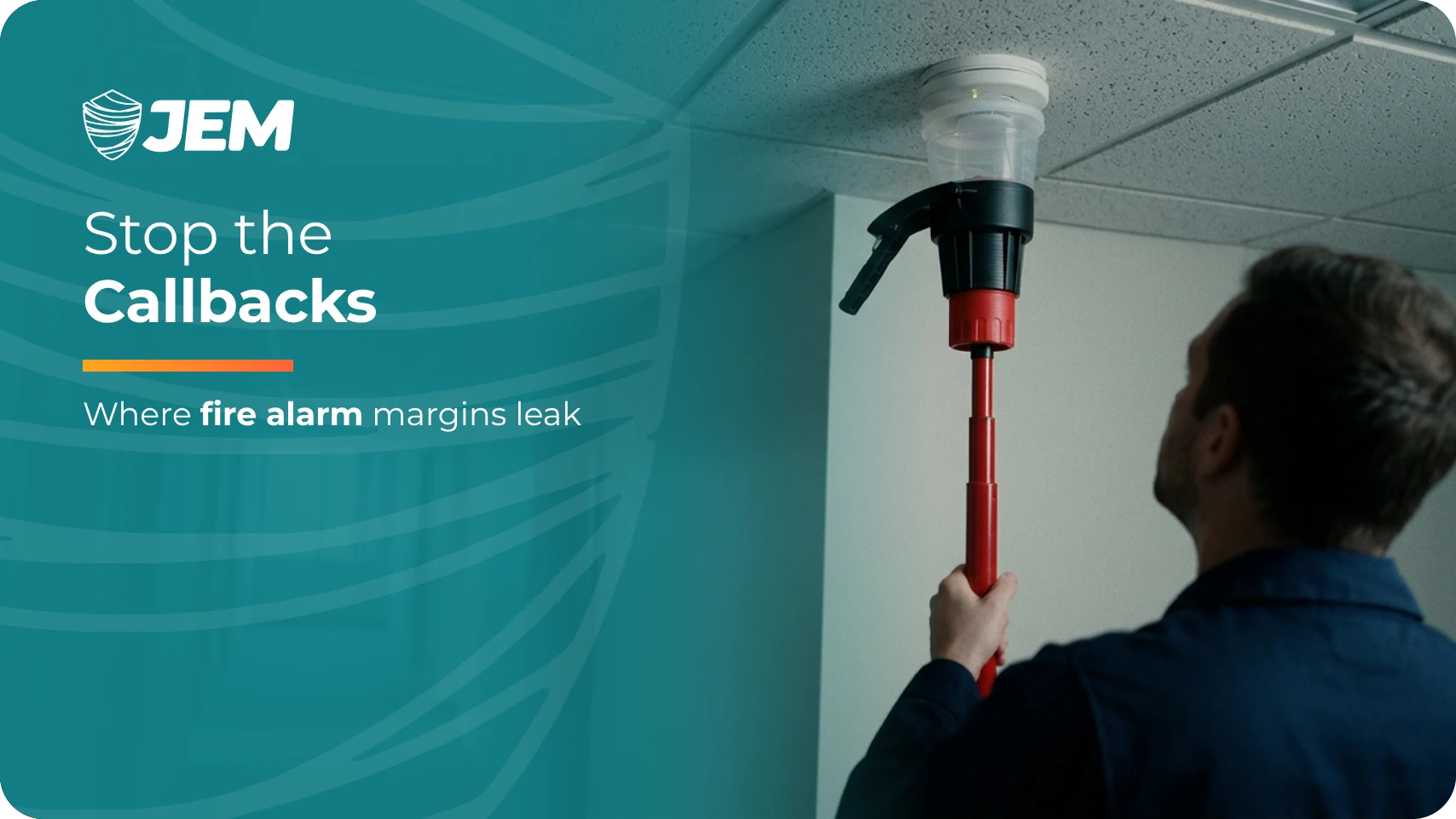
A fire alarm job can look profitable on paper and still lose money in the field. Often, the margin leaks out slowly: a return trip here, a failed inspection there, a nuisance alarm that brings the crew back again. This article looks at fire alarm callbacks and rework as a margin problem, and at how training helps plug the leak, as of November 2026.
Key takeaways
- Rework is costly: an FMI and PlanGrid study tied $31.3 billion of U.S. rework in 2018 to poor data and miscommunication.
- Callbacks hurt twice: ServiceTrade links a high first-time fix rate to fewer callbacks and happier customers.
- Failed inspections cost money: some AHJs charge for re-inspections, and fees vary by jurisdiction.
- Skills are scarce: 86% of surveyed fire and mechanical service contractors named a shortage of skilled techs as a top concern.
Why fire alarm callbacks eat your margin
In fact, every callback has two costs. First, there is the direct cost: labor, travel and parts for a visit you cannot bill, or can bill only in part. Second, there is the hidden cost: the crew is not on a paying job while it fixes the last one.
As ServiceTrade puts it, a high first-time fix rate reduces callbacks, increases customer satisfaction and makes the business more efficient. In other words, getting it right on the first visit is a margin strategy, not only a quality goal.
The bigger picture: rework across construction
However, the problem is not unique to fire alarm work. According to the FMI and PlanGrid “Construction Disconnected” report, summarized by Autodesk, poor project data and miscommunication caused $31.3 billion in U.S. rework in 2018. Moreover, the same report found that respondents spent 35% of their time on non-productive work, such as looking for project information, resolving conflicts and fixing mistakes.
So, rework is not a rare event. Instead, it is a steady drain, and it can show up on any job.
Where fire alarm callbacks come from
In fire alarm work, fire alarm callbacks tend to cluster around a few moments:
- Failed acceptance tests, when devices, wiring or programming do not match the plan.
- Failed inspections, when the AHJ finds a problem and asks you to come back.
- Nuisance alarms and trouble signals after handover.
- Programming errors found by the owner or the monitoring company.
False alarms are a real load
Nuisance alarms also hit fire departments. According to NFPA Journal, U.S. fire departments responded to 2,893,000 false alarms in 2019, or 8% of all responses. Of those, 31% were system malfunctions, as NFPA counts them. NFPA does not break that category down by cause, so not every malfunction traces back to installation or service. Still, each one can mean another visit. Also, our article on false fire alarms covers the design side.
The cost of a failed inspection
Meanwhile, re-inspection fees make the cost visible. For example, the Austin Fire Department FY26 fee schedule charges $148 per hour after the first inspection trip for continuations, partials and failed inspections. Similarly, McAllen, Texas, lists a $50 re-inspection fee in its 2025 fire alarm fee schedule.
Even so, the fee can be the smallest part. On top of it, you pay for the crew’s return trip, the delay to the owner’s schedule and, sometimes, the general contractor’s patience.
How training reduces fire alarm callbacks
Admittedly, training will not prevent all fire alarm callbacks. However, it targets the causes you control. For instance:
- Installers who know the device and the manual can make fewer wiring and mounting mistakes.
- Programmers who know the panel can avoid errors that show up at the test.
- Test techs who know NFPA 72 and the AHJ’s checklist can catch problems before the inspector does.
- Service techs who troubleshoot well are more likely to fix it on the first visit.
Meanwhile, skilled people are hard to find. In a 2024 ServiceTrade survey of commercial fire and mechanical service contractors, 86% named a shortage of skilled technicians as a top concern, and 71% named increasing profit margin. As a result, training the people you have can be a practical path to both.
For the upside of training, such as new work and retention, see our article on fire alarm training that drives profit.
What this means for contractors
Overall, protect your margin by measuring what leaks out. In practice:
- Track every callback by cause and by crew.
- Also count re-inspection trips and fees on each job.
- Train against the top causes, not at random.
- Review the numbers every quarter.
Then, to find upcoming JEM trainings, check the Events Hub. For design support that helps you start with a clean plan, see JEM’s Fire Alarm Design service.
Frequently asked questions
What is a first-time fix rate?
It is the share of service calls you fix on the first visit. Therefore, a higher rate means fewer fire alarm callbacks.
How much do re-inspections cost?
It varies by AHJ. For example, Austin charges $148 per hour after the first trip, and McAllen lists a $50 fee.
Can training really cut callbacks?
It targets the causes you control, such as wiring, programming and testing errors. Track your numbers to see the effect.
This article is general information and does not replace the requirements of your jurisdiction. Confirm the applicable codes with your AHJ.
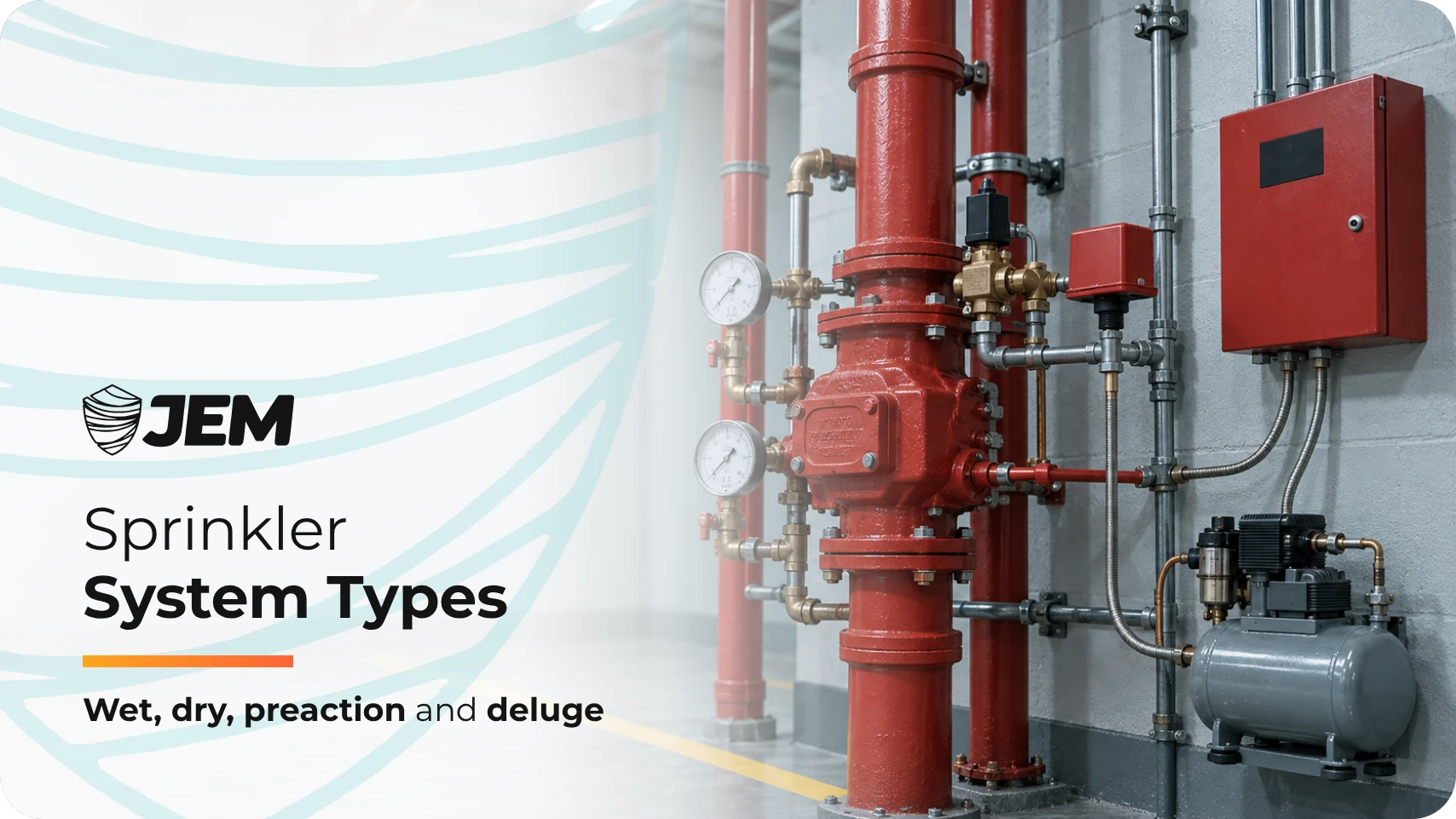
Read next: Choosing the Right Sprinkler System: A Guide to Sprinkler System Types
Sources
- KPIs for commercial service contractors, ServiceTrade
- Construction Disconnected: FMI report, Autodesk (March 6, 2018, updated November 17, 2023)
- False alarm data, NFPA Journal (September/October 2020)
- FY26 Approved Fee Schedule, Austin Fire Department
- 2025 Fire Alarm Fee Schedule, City of McAllen (revised March 2025)
- Commercial fire and mechanical service contractors rank top concerns, ServiceTrade via GlobeNewswire (April 29, 2024)
Leave a Reply