
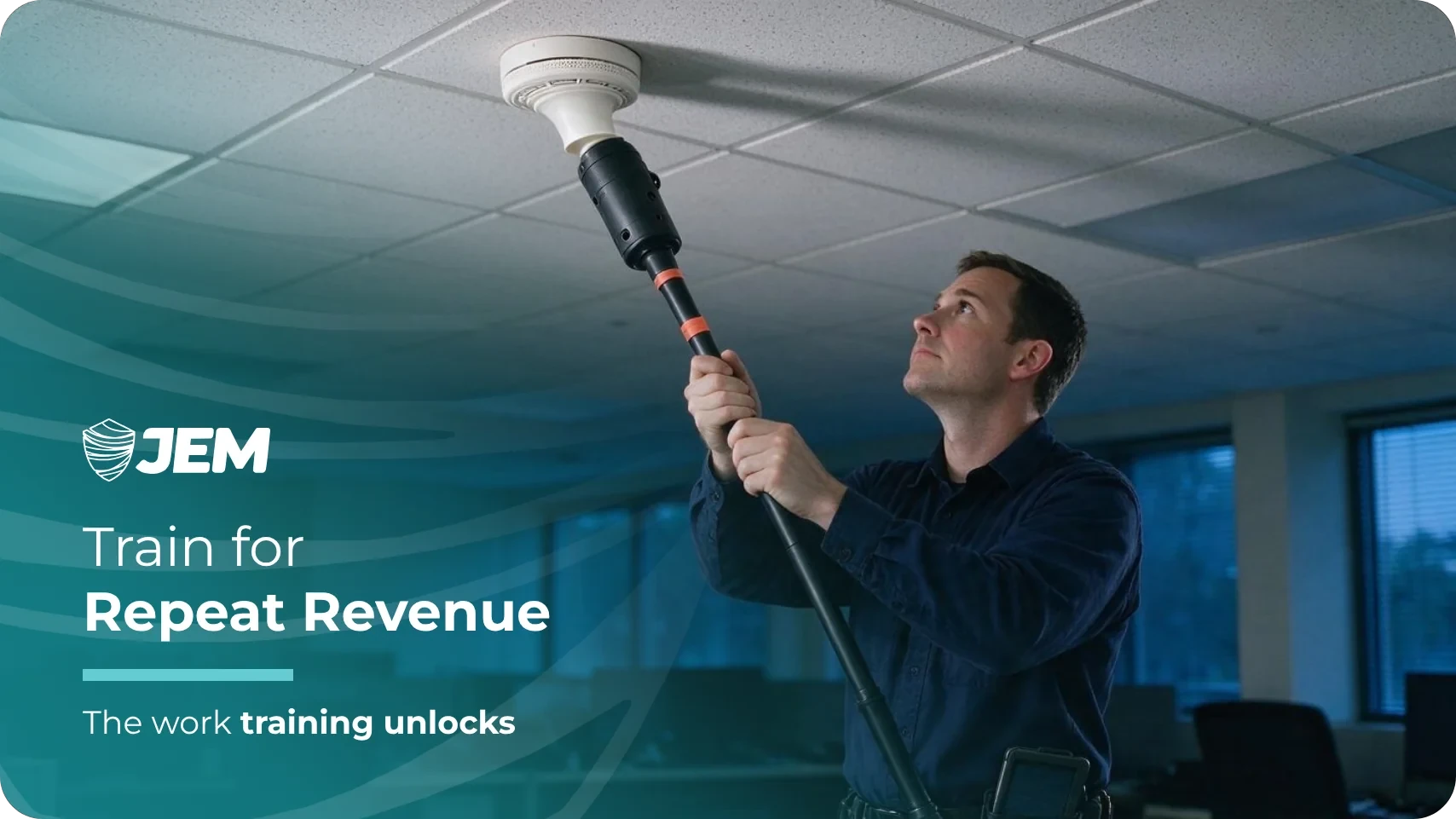
Most contractors file training under overhead. However, the right training opens work you cannot take on without it, and it protects the margin on the work you already have. So, this article looks at how contractors profit from training: which doors it opens, which costs it cuts and how to measure the return, as of November 2026.
Key takeaways
- Training unlocks work: service, inspection and design roles often call for qualified or certified people.
- Service work repeats: NFPA 72 sets regular test cycles, such as annual tests of smoke detectors.
- Skills keep people: technicians rank pride and problem-solving above pay as motivators.
- Measure it: track first-visit pass rates, callbacks and new contracts tied to new skills.
Why contractors can profit from training
Of course, training is a cost on the day you pay for it. Still, its value shows up later, in three places: new work you can bid, fewer costly mistakes and people who stay. In turn, each of these becomes margin.
Our article on skipping fire alarm training covers the cost side: failed tests, return trips and the “AHJ tax.” Here, instead, we look at the upside.
Profit from training through recurring service work
After all, installation is a one-time job. Service and inspection, on the other hand, come back on a schedule. Indeed, NFPA 72 sets test frequencies for many devices. For example, smoke detectors are tested for alarm response every year, according to an Inspect Point summary of the 2019 and 2022 editions. Also, detector sensitivity is checked within the first year after installation and then every alternate year. Waterflow and tamper switches follow their own, shorter cycle.
Naturally, that work needs qualified people. NFPA 72 lists specific ways service staff can qualify, from factory training to recognized certification, as our earlier article explains. In short, every trained tech can open the door to repeat revenue.
Training opens design and specialty work
Meanwhile, some states set rules for who can design fire alarm systems. For example, Texas requires designers to pass the NICET Level III exam or hold a professional engineer license, as SecurityInfoWatch reported in June 2024.
Similarly, specialty lines like BDA/DAS/ERCES often come with their own credential rules. So, a team with the right certificates can bid on jobs that others must pass on. Our article on BDA training covers those rules.
Training helps you keep good people
Above all, turnover is expensive. In NFPA’s survey for 2026, 39% of skilled trades workers named retention as a top challenge, as reported by the International Fire & Safety Journal. The same survey found that 54% planned to take part in more training in the next year.
So, what keeps techs engaged? In ServiceTrade’s 2026 Technician Insights Report, pride (55%), problem-solving (51%) and hands-on skills (51%) all ranked well above pay (30%). In other words, people want to get better at the job. As a result, a clear training path can help you keep them.
How to measure the profit from training
You can profit from training only if you track it. For that reason, pick a few simple numbers:
- First-visit pass rate on acceptance tests and inspections.
- Callbacks within 30 days of a job.
- New work won that needed a new credential.
- Turnover among trained versus untrained staff.
Then, review them every quarter. If a course does not move any of these, change it.
For example, say a two-day course costs a crew lead three field days, counting travel. If it lets your team pass one more acceptance test on the first visit, the saved return trip may cover much of that cost. Likewise, one new service contract that needs a certified tech may pay back the exam fee on its own. Run the numbers with your own rates before you decide.
What this means for contractors
Overall, treat training as an investment with a target. In practice:
- Tie each course to a goal, such as a new service line or fewer failed tests.
- Start with roles that earn, like service techs and designers.
- Keep proof on file for AHJs and bid documents.
- Measure, then adjust.
For BDA work, JEM’s BDA Design team also helps teams secure manufacturer certifications. To find upcoming sessions, check the JEM Events Hub.
Frequently asked questions
Is training really a profit driver?
It can be, when it opens new work, cuts rework or helps you keep staff. Track the numbers to see which applies to you.
Which roles should I train first?
Start with the roles that bring repeat or higher-margin work, such as service techs, designers and specialty crews.
How often are smoke detectors tested?
Under recent NFPA 72 editions, smoke detectors are tested for alarm response annually. Confirm the edition your AHJ enforces.
This article is general information and does not replace the requirements of your jurisdiction. Confirm the applicable codes with your AHJ.
Read next: The Vital Role of Staff Training in Life-Saving BDA Systems
Sources
- Fire Alarm Inspection Requirements, Inspect Point (August 12, 2026)
- Fire Alarm 411: NICET, a certification that travels, SecurityInfoWatch (June 14, 2024)
- NFPA Skilled Trades survey shows technology plans and workforce worries, International Fire & Safety Journal (January 15, 2026)
- 2026 Technician Insights Report, ServiceTrade (February 11, 2026)
Leave a Reply