
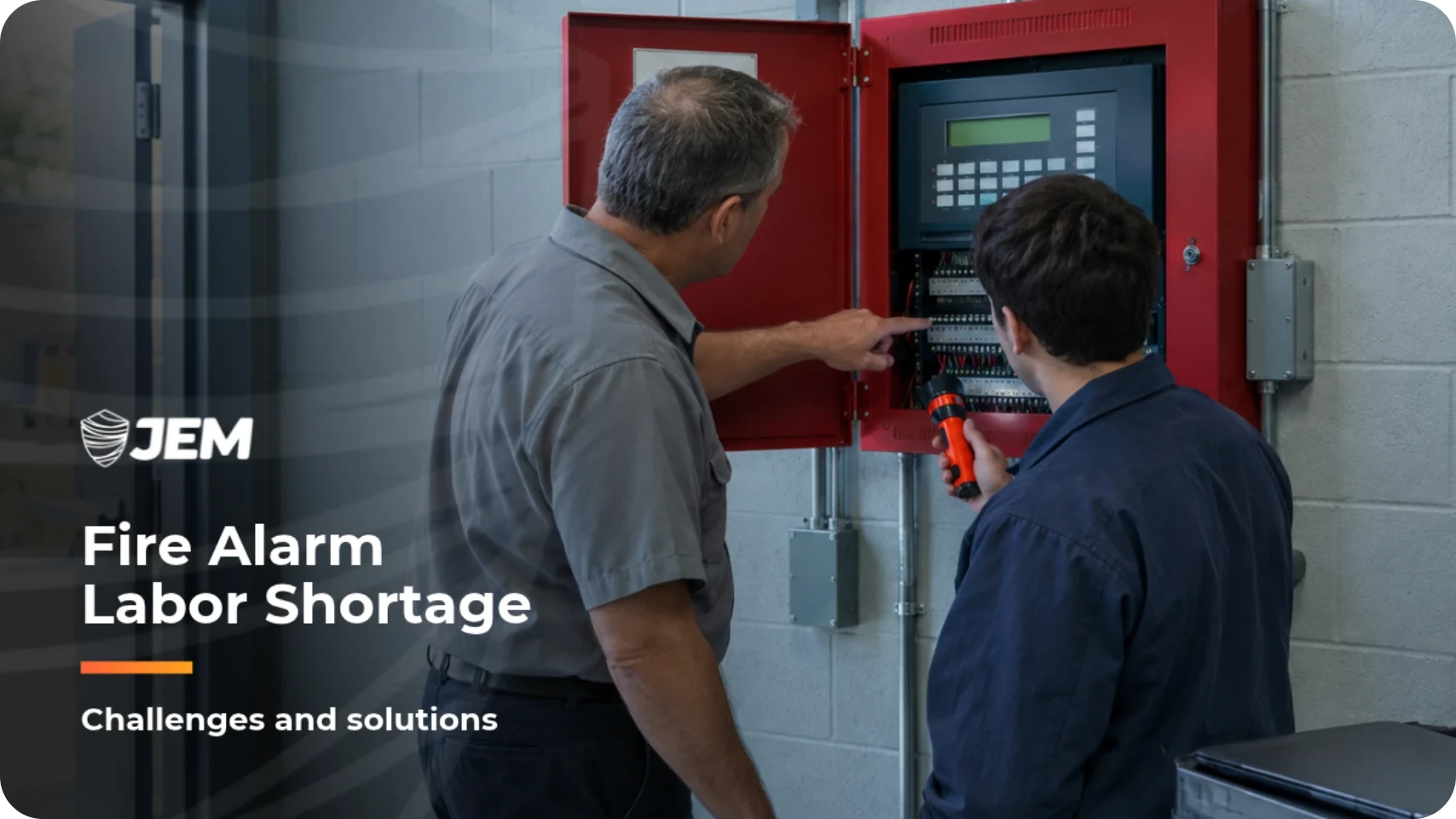
The fire alarm labor shortage is no longer a forecast. Instead, it shows up in every bid, every schedule and every service call that waits a week. In NFPA’s 2026 survey of skilled trades workers, more than half named a shortage of qualified candidates as their biggest challenge for the year. Below is what the data says, why the pool keeps shrinking, and what contractors can do about it, as of November 2026.
Key takeaways
- The gap is growing: 53% of skilled trades workers in NFPA’s 2026 survey called the shortage of qualified candidates their top challenge, up from 50% a year earlier.
- Retention is the twin problem: 39% named workforce retention as a top challenge for 2026.
- People want training: 54% planned to take part in more training in the next year.
- Small fixes add up: clear career paths, better scheduling and early AHJ contact free up the people you already have.
How big is the fire alarm labor shortage?
NFPA’s annual “State of the Skilled Trades” report gives a useful snapshot. For the 2026 edition, NFPA surveyed 512 U.S. workers between October 27 and November 3, 2025, according to the NFPA news release. Also, the group spans electrical, construction, fire protection, inspection and AHJ roles, among others.
As reported by International Fire & Safety Journal, 53% said a shortage of qualified candidates will be their biggest challenge at work in 2026. In addition, 39% cited workforce retention. The year before, the shortage figure stood at 50%, according to Fire & Safety Journal Americas.
These numbers cover the skilled trades as a whole, not fire alarm alone. Still, fire alarm work sits right in the middle of that group. So, the fire alarm labor shortage follows the same curve, and the pressure lands on your crews.
Why the fire alarm labor shortage keeps growing
Three forces show up again and again.
- Experience is leaving. In the NFPA survey for 2025, 31% of respondents named retirement as a major staffing concern. When a senior tech retires, years of panel and AHJ know-how leave with them.
- Hiring is hard. Fire alarm work asks for code knowledge, careful documentation and field skill. Those take time to build, so new hires rarely arrive ready.
- People leave for better jobs. Retention is now a top concern in its own right. In short, every tech who leaves takes years of training with them.
What keeps technicians on the job
Pay matters, but it is not the only lever. In ServiceTrade’s 2026 Technician Insights Report, based on a survey of more than 800 technicians, pride (55%) and problem-solving (51%) led the list of motivators. Pay came in at 30%.
The same report found the top frustrations were miscommunication (45%) and inefficient scheduling (44%). In other words, both are coordination problems, not skill problems. That means a contractor can often fix them with better planning, not more headcount.
Solutions for the fire alarm labor shortage
No single move closes the gap. However, a few practical steps help most teams.
Partner for design and engineering work
Design, takeoff and submittals eat hours that your field leads could spend on site. One option is to hand part of that load to a design partner. For example, JEM’s Fire Alarm Design team delivers device layouts with SLC and NAC pathways, riser diagrams, battery calculations and submittals, with a single point of contact.
Build a clear training path
New hires stay longer when they can see the next step. A simple path might start with manufacturer training, then move to a recognized certification. For instance, NICET’s In-Building Public Safety Communications program starts at Level I with at least 6 months of experience, according to the NICET candidate handbook (August 2026). Pair each step with a senior mentor, and the knowledge stays in the company.
Fix scheduling and communication first
Because miscommunication and scheduling top the list of tech frustrations, start there. Share job details before the truck rolls. Keep drawings, sequences and panel notes in one place. Also, track revisions so the crew never works from an old set.
Talk to the AHJ early
After all, rework burns labor you do not have. Many AHJs publish what they expect, and some spell it out in detail. For example, the Prosper, Texas fire marshal’s guide (rev. April 2023) notes that the fire code official must be notified before any required acceptance testing. Learn each AHJ’s submittal process, answer comments fast and follow local amendments.
What the fire alarm labor shortage means for contractors
The fire alarm labor shortage will not end soon, so plan around it. In practice, a few habits protect your margins and your people:
- Measure where hours go. Design, paperwork and rework are often the easiest hours to win back.
- Invest in the people you have. Training plans and clear titles cost less than turnover.
- Plan certifications on purpose. Some codes and AHJs set rules for who can design or install certain systems, so check before you staff a job.
- Remove friction. Better scheduling and clear job notes answer the top complaints techs report.
If your team needs manufacturer certifications for BDA work, JEM’s BDA design team also helps teams obtain them.
Frequently asked questions
Is the labor shortage only a fire alarm problem?
No. Instead, the NFPA survey covers many skilled trades. Even so, fire alarm and fire protection roles are part of that group and feel the same pressure.
What is the fastest way to free up field time?
Look at design, takeoff and paperwork first. Those hours are easier to move to a partner or a better process than field hours.
Do certifications help with retention?
They help people see a future in the job. In the 2026 NFPA survey, 38% planned to sit for more certifications in the next year.
This article is general information and does not replace the requirements of your jurisdiction. Confirm the applicable codes with your AHJ.
Read next: Data Center Early Detection: What Very Early Warning Means
Sources
- Skilled Workers Look to Technology Amid Workforce Shortages and Codes and Standards Rollbacks, NFPA (January 15, 2026)
- NFPA Skilled Trades survey shows technology plans and workforce worries, International Fire & Safety Journal (January 15, 2026)
- Skilled labor shortage and technology adoption highlighted in NFPA’s 2025 industry trends survey, Fire & Safety Journal Americas (December 13, 2024)
- 2026 Technician Insights Report, ServiceTrade (February 11, 2026)
- In-Building Public Safety Communications Candidate Handbook, NICET (August 2026)
- A Fire Alarm Contractor’s Guide to Success, Prosper Fire Rescue (rev. April 2023)


Leave a Reply